What Is Contrast Therapy?
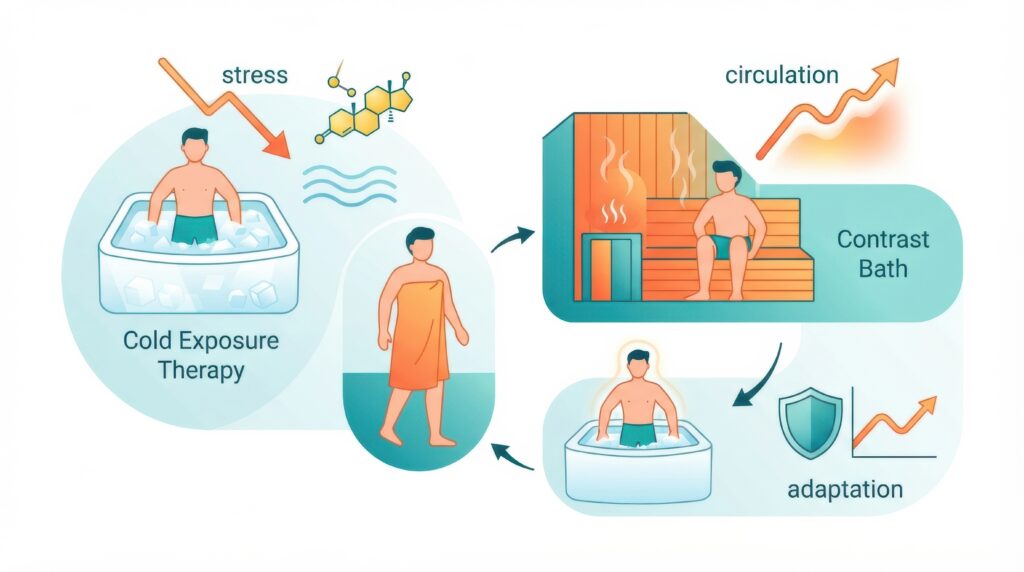
Contrast therapy is a wellness and recovery practice that alternates between periods of heat and cold exposure. A typical experience may combine heat-based treatments such as a sauna with cold exposure such as a cold plunge or cold shower. Moving between warm and cold environments creates a unique experience that engages both the body and nervous system.
For many people, contrast therapy provides an opportunity to step away from the demands of everyday life and reconnect with their bodies. The combination of heat, cold, focused breathing, and intentional recovery can promote relaxation and increase body awareness. It can also create a greater sense of mental clarity.
Contrast therapy is often incorporated into recovery and self-care routines. Athletes may use it after physical activity to support recovery. Others may use it as a way to manage everyday stress, practice resilience, or create intentional moments of mindfulness.
How Does Contrast Therapy Work?
Contrast therapy works by alternating between heat and cold exposure. Heat causes blood vessels to widen and increases blood flow. Cold exposure causes blood vessels to constrict. Moving between the two environments creates a noticeable physiological response and can leave you feeling refreshed and energized. The experience also encourages you to pay attention to your breathing and physical sensations. Cold exposure can create an intense initial response that makes the body feel more alert. Learning to slow your breathing and remain present during that moment can become an intentional mindfulness practice.
Rather than viewing contrast therapy as simply “hot and cold,” it can be viewed as an opportunity to practice responding to physical sensations with awareness. Instead of immediately reacting to discomfort, you can adapt to the difficult feelings of shock, cold, and take control of your body’s natural reaction.
What to Expect During a Contrast Therapy Session
Every contrast therapy experience is a little different, depending on the facility, the equipment available, and your individual comfort level. A typical session involves alternating between periods of heat exposure, such as time in a sauna, and cold exposure, such as a cold plunge.
If you are new to contrast therapy, it is generally best to start gradually. You may begin with a shorter period of heat exposure followed by a brief cold exposure at a temperature that feels manageable for you. As you become more comfortable, you can gradually adjust the length and intensity of each phase. There is no need to push yourself beyond what feels safe or comfortable. During the transition from heat to cold, you may notice changes in your breathing, heart rate, and level of alertness. Focusing on slow, controlled breathing and paying attention to how your body responds can help you move through the transition comfortably.
You may experience sensations such as warmth, coolness, tingling, increased alertness, or a feeling of rejuvenation following a session. Responses to heat and cold exposure vary from person to person, so it is important to listen to your body throughout the experience. Contrast therapy should feel challenging but manageable, not like something you have to endure or “push through.”
For those interested in trying contrast therapy, there are a variety of wellness facilities that offer these services. In the western suburbs, Fire + Ice in Woodridge, Illinois, is one local option to explore. When choosing a facility, consider the experience and training of the staff, cleanliness and maintenance of the equipment, available safety guidance, and whether the facility allows you to adjust the intensity of the experience to your individual comfort level.
Can You Try Contrast Therapy at Home?
You don’t necessarily need specialized equipment or a wellness facility to experiment with contrast therapy. A simple at-home approach can involve alternating between warm and cool water in the shower. This can be a gentler way to become familiar with the sensations of changing temperatures while paying attention to how your body responds.
If you’re new to this practice, start with a comfortably warm shower or bath for several minutes. Gradually transition to cooler water for a short period of time, then return to warm water. You can repeat the cycle once or twice, adjusting the temperature and duration based on your comfort level. The goal is not to see how much cold you can tolerate, but rather to notice how your body responds to the change in temperature and practice remaining calm and aware during the transition.
If you have access to a sauna or other heat source at home, you may be able to incorporate that into your routine as well. However, appropriate hydration, temperature control, and safety precautions are important when using significant heat exposure. As with any wellness practice involving substantial changes in body temperature, listen to your body and stop if you experience dizziness, lightheadedness, chest discomfort, difficulty breathing, or feel unwell. Contrast therapy is not about pushing through discomfort or seeing
Potential Benefits of Contrast Therapy
Everyone responds to contrast therapy differently. Many people incorporate it into their wellness routines because they enjoy the combination of physical recovery, relaxation, mental clarity, and intentional self-care.
Potential benefits may include:
- Supporting physical recovery after exercise or strenuous activity
- Promoting circulation and changes in blood flow
- Reducing the perception of muscle soreness after exercise
- Encouraging relaxation after periods of physical or mental stress
- Supporting feelings of mental clarity and alertness
- Increasing body awareness and mindfulness
- Providing an opportunity to practice controlled breathing
- Supporting resilience and tolerance of temporary discomfort
- Creating an intentional break from daily stressors
- Promoting a stronger connection between the mind and body
Some people also find the structured experience helpful when managing feelings of stress or overwhelm. Heat and cold exposure require you to focus on the present moment. This can temporarily shift your attention away from racing thoughts and toward your breathing and physical sensations.
Why Incorporate Contrast Therapy?
We live in a world that often encourages us to live fast and rush while contrast therapy provides an opportunity to intentionally pause. It allows you to reconnect with your body and focus on the present moment. Whether your goal is to support physical recovery, create a new self-care ritual, practice mindfulness, or simply experience something different, contrast therapy can become part of a broader wellness routine.
At Illuminate Therapy & Wellness, we believe wellness extends beyond mental health alone. Caring for the mind also means paying attention to the body and nervous system. It means becoming more aware of how we respond to stress and physical discomfort. Contrast therapy offers a unique opportunity to challenge yourself in a controlled environment. It encourages awareness, intentional breathing, and recovery. With appropriate guidance and attention to individual needs, it can become a meaningful addition to a holistic approach to wellness.
Is Contrast Therapy Right for You?
As with any wellness practice involving significant heat or cold exposure, contrast therapy may not be appropriate for everyone. Individuals with certain medical conditions, cardiovascular concerns, pregnancy, or other health considerations should consult with an appropriate healthcare professional before participating. Your comfort and safety should always come first. Contrast therapy should be approached gradually and with attention to how your body responds throughout the experience.
*If you have a medical condition, are pregnant, take medications that affect blood pressure or circulation, or have concerns about whether significant heat or cold exposure is appropriate for you, talk with your healthcare provider before trying contrast therapy.
By Aaliyah Rogel, LPC, NCC